
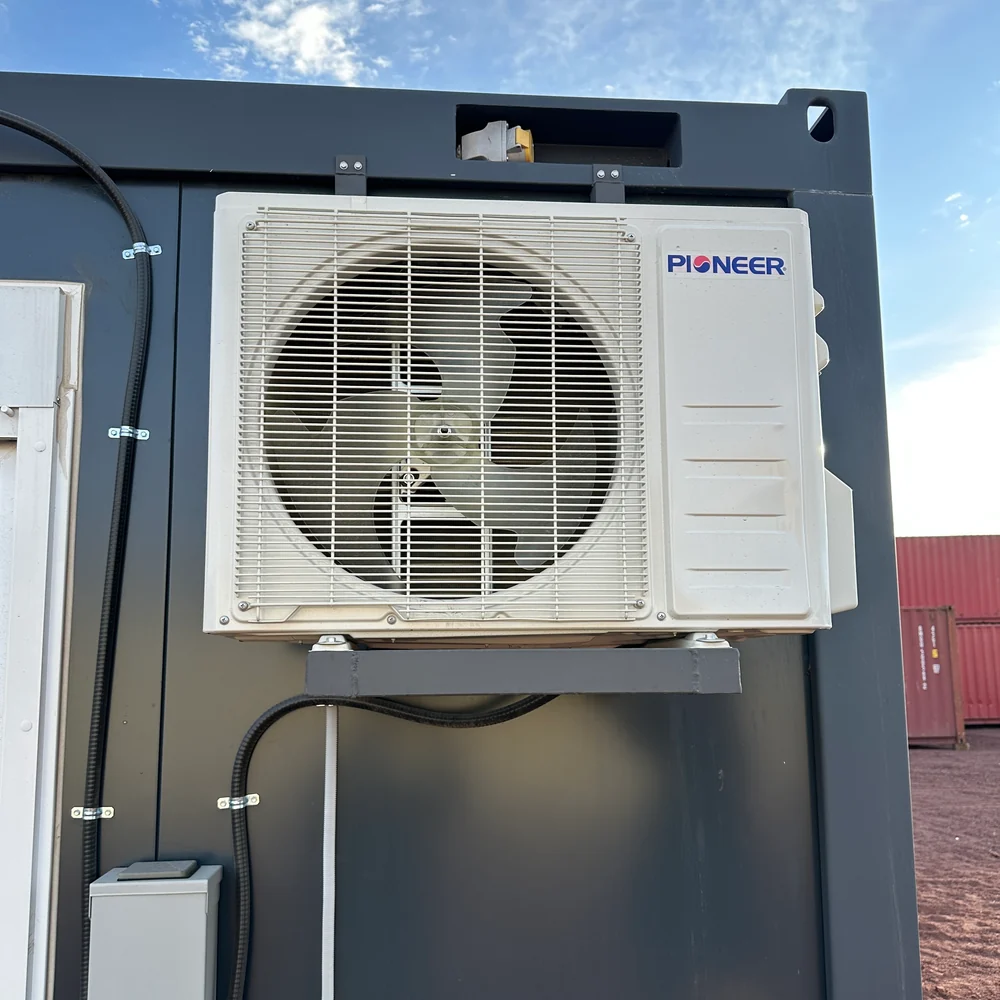
The Container Mini Split AC gives shipping container offices, homes, workshops, studios, storage units, and modular buildings a practical solution for year-round indoor comfort. Its ductless design provides targeted heating and cooling without requiring a traditional central air system or extensive ductwork.
The compact indoor and outdoor components make installation easier in converted containers where interior space matters. This setup also helps maintain a clean appearance while providing dependable temperature control.
Ductless Design
A mini split system uses an indoor air-handling unit connected to an outdoor condenser through refrigerant lines and electrical connections. This arrangement allows efficient climate control without large ventilation ducts running through the container.
Different capacity options can match various container sizes, insulation levels, climate conditions, and intended uses.
Key Features
| Feature | Details |
|---|---|
| System Type | Ductless Mini Split HVAC |
| Main Function | Heating and Cooling |
| Installation | Indoor and Outdoor Units |
| Applications | Containers and Modular Buildings |
| Temperature Control | Adjustable |
| Operation | Quiet |
| Energy Efficiency | Varies by model |
| Capacity | Multiple BTU options |
| Remote Control | Available on many models |
| Main Uses | Office, home, workshop, studio |
Container Applications
The Container Mini Split AC works well for 20ft and 40ft converted units where occupants need reliable indoor temperature control.
A Shipping Container HVAC system can support offices, classrooms, tiny homes, guard stations, portable clinics, retail spaces, studios, and temporary work facilities.
Comfortable Operation
A Ductless Air Conditioner distributes conditioned air directly into the room without requiring bulky duct systems. Many models also include heat-pump operation, allowing the same equipment to provide both cooling and heating.
Proper insulation can improve performance by reducing heat transfer through the container walls and roof.
Practical Installation
A Container Climate Control solution should match the unit size, insulation level, local climate, electrical supply, and intended occupancy.
Worldwide Container Supply offers HVAC solutions for container conversions, modular buildings, offices, homes, and commercial projects. Contact us for available capacities, electrical requirements, installation options, specifications, pricing, and delivery information.



Nathaniel Brooksby –
Maintaining a comfortable indoor temperature is important when converting a shipping container into an office, workshop, or living space. A mini split HVAC system can be worth considering because it combines heating and cooling capabilities in a compact arrangement, depending on the model selected. When evaluating this system from Worldwide Container Supply, I would confirm its cooling capacity, heating output, energy efficiency, and suitability for the container’s dimensions and insulation. It is also important to establish the electrical requirements and installation process before ordering. Matching the equipment to the space helps buyers plan for comfortable indoor conditions throughout the year.
Astrid Eklund –
Heating and cooling requirements vary considerably depending on the location and how a container is used. For a mini split HVAC system, I would review its rated cooling and heating capacity, operating temperature range, energy efficiency, and defrost performance where relevant. Worldwide Container Supply can be approached to obtain the available product documentation and clarify which features are included. Buyers should also confirm that the selected system is appropriate for the local climate and that the container has adequate insulation. Proper sizing and professional installation are important for achieving reliable performance and avoiding unnecessary energy consumption.
Diego Alvarado –
Shipping containers converted into living spaces need climate control suited to their insulation, layout, and local weather conditions. A mini split system may be worth evaluating for a small container home or studio, depending on its rated capacity and features. Before ordering from Worldwide Container Supply, I would ask for details about the indoor and outdoor units, power requirements, refrigerant specifications, and installation provisions. It is also important to consider sunlight exposure, ceiling insulation, and the number of windows. Evaluating the whole space rather than choosing an HVAC system by appearance alone can help buyers make a more informed decision.
Felipe Andrade –
Converting a shipping container for commercial or residential use requires careful planning for ventilation and temperature control. A mini split HVAC system can be an option for managing indoor conditions, provided its capacity matches the space and expected heat load. When discussing this product with Worldwide Container Supply, I would request the technical specifications, installation guidance, and information about the electrical requirements. I would also consider the container’s insulation, roof exposure, number of occupants, and equipment operating inside the space. These details help determine whether the proposed system is appropriate for the intended use.
Pavel Dimitrov –
Container-based workspaces and commercial facilities often need dependable temperature management to support daily activities. When assessing a mini split HVAC system, I would compare the rated capacity, energy efficiency, noise level, maintenance needs, and warranty conditions. Worldwide Container Supply can be contacted to request the relevant specifications and confirm compatibility with the intended container application. I would also verify that the electrical installation meets local standards and that the system is sized for the container’s insulation and heat load. Careful preparation helps buyers establish realistic operating expectations and select equipment that suits their planned use.
Milena Horvat –
Container offices can become uncomfortable when indoor temperatures are not properly managed, especially during periods of hot or cold weather. A mini split HVAC system may provide a practical solution when correctly sized for the space. Worldwide Container Supply can be contacted to request information about the available system specifications and installation requirements. Before purchasing, I would check the unit’s capacity, operating noise, energy consumption, electrical supply, and suitability for the office layout. Insulation, window placement, and air leakage also affect performance, so these factors should be considered alongside the HVAC equipment when planning a container conversion.
Saskia Vermeulen –
Installing climate-control equipment in a shipping container requires attention to placement, drainage, electrical supply, and the structure of the container itself. With a mini split HVAC system, I would confirm the required wall openings, line-set routing, outdoor-unit location, and clearance for airflow and maintenance. Worldwide Container Supply can be contacted for product information and guidance on the available configuration. I would also ask whether installation materials are included and whether a qualified HVAC technician is required for commissioning. Planning these details before delivery can help avoid installation delays and ensure the system is suited to the converted container.