
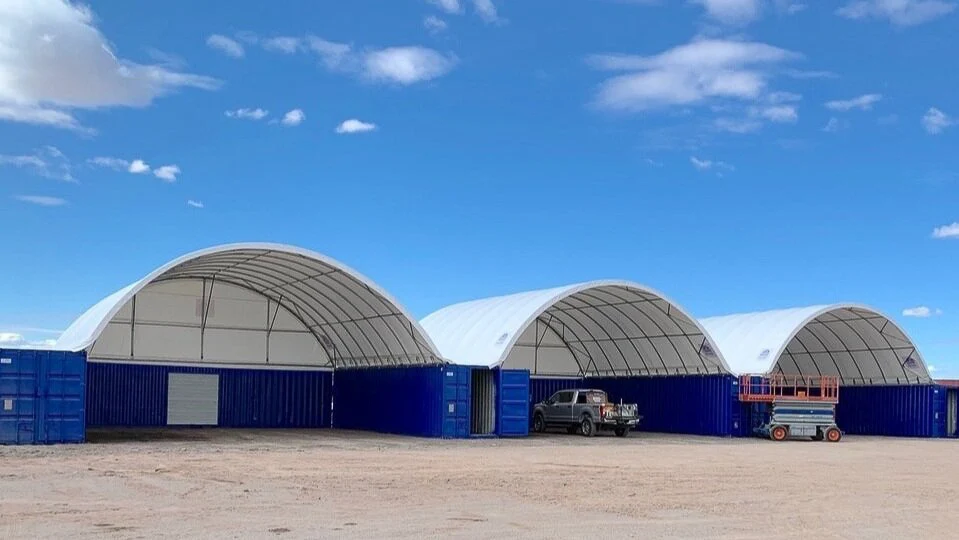
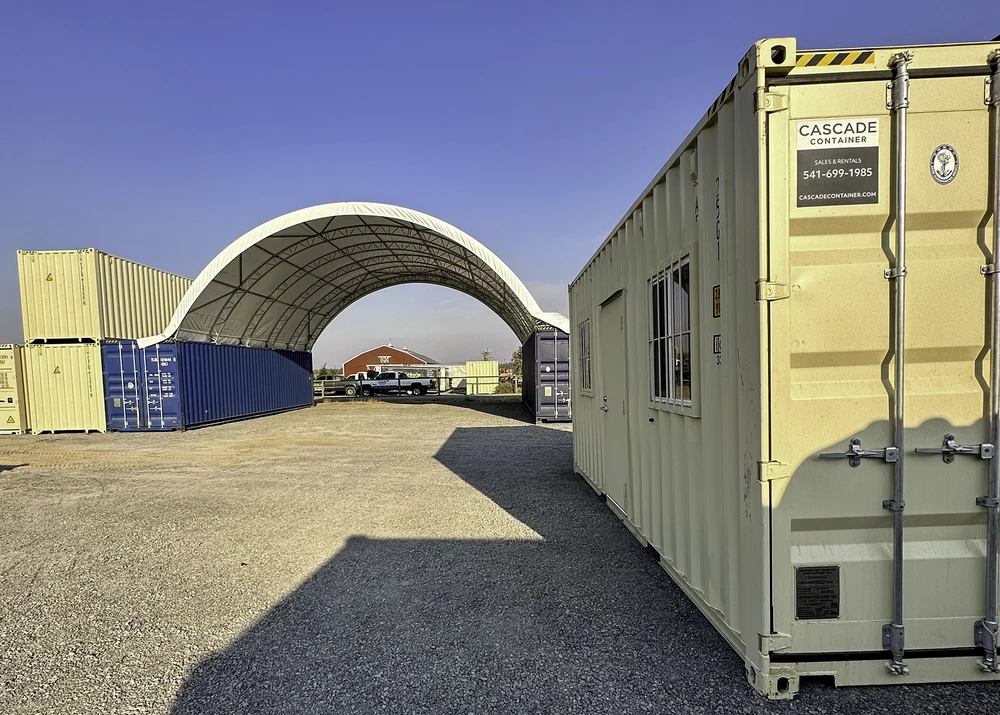
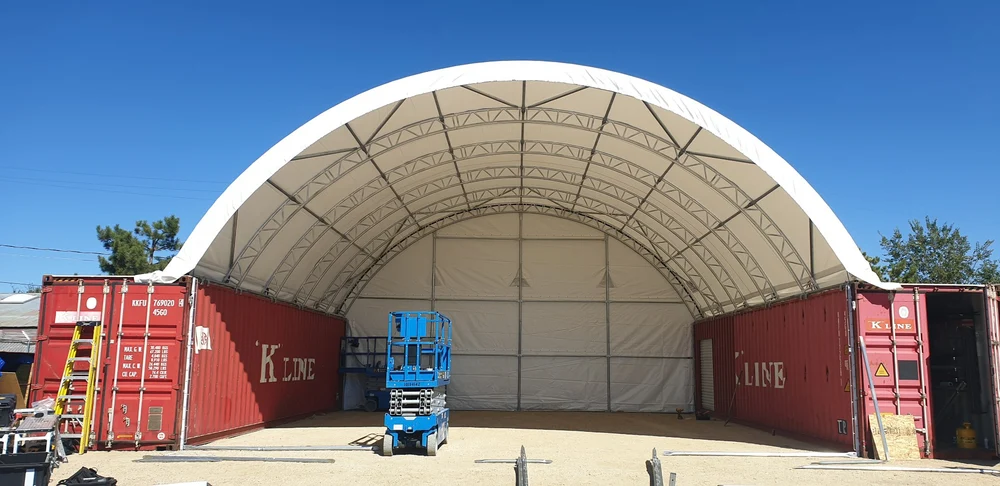
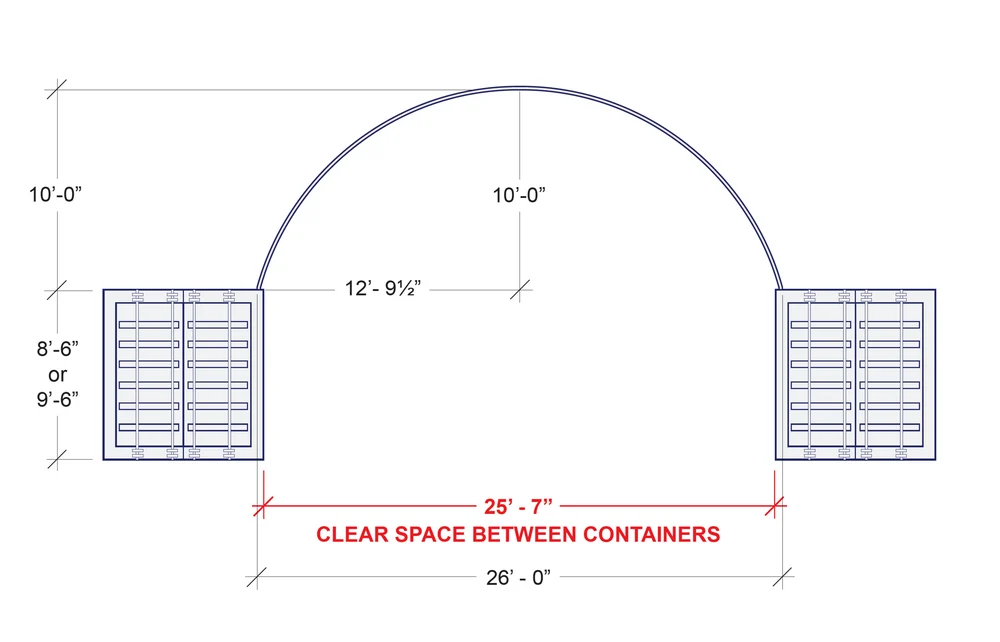
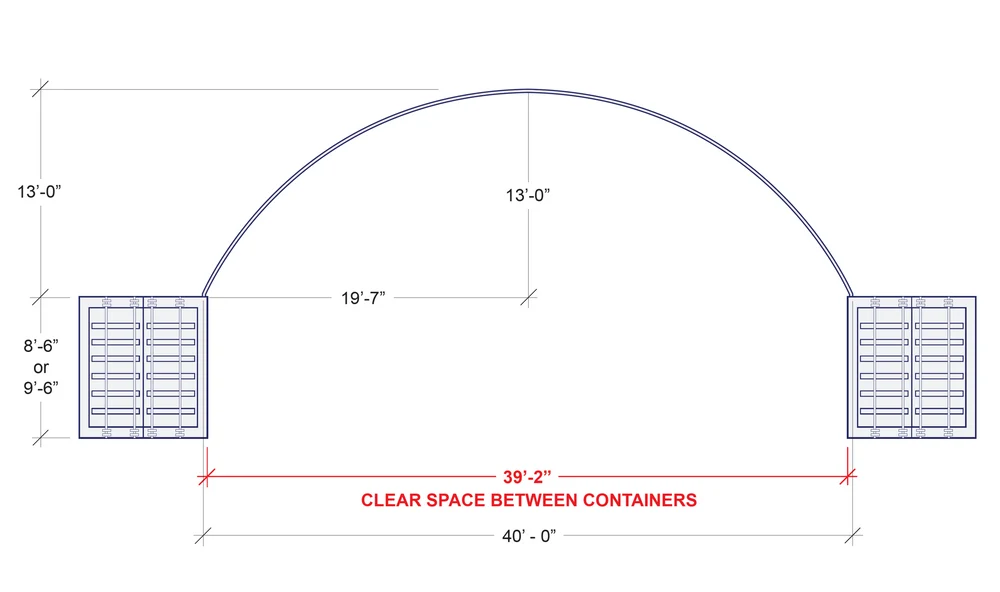
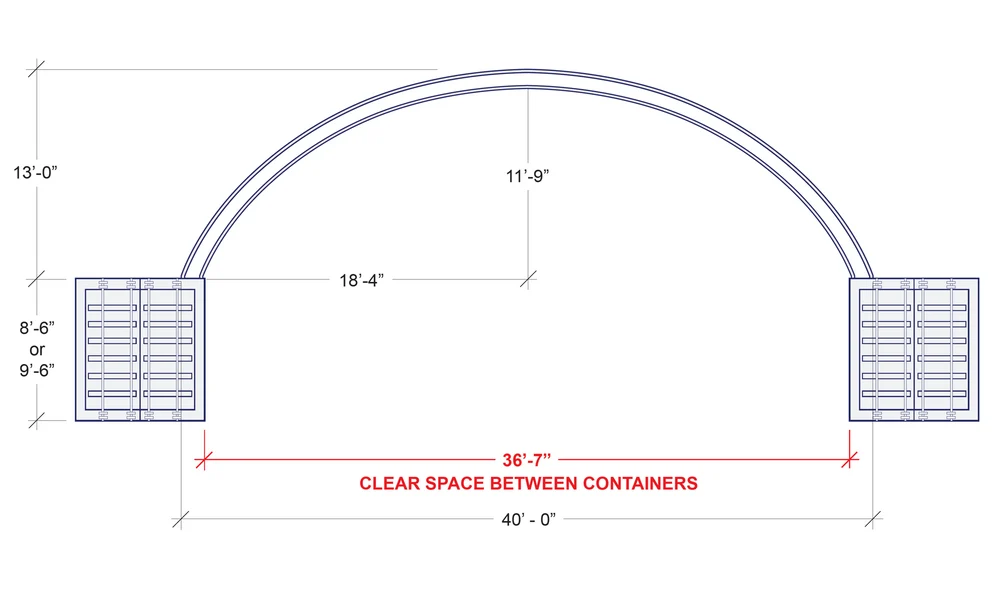
The Container Canopy Shelter gives businesses, contractors, farms, warehouses, and industrial sites a practical way to create covered space between shipping containers. It uses the containers as strong side supports while the canopy spans the open area above.
This setup works well for equipment storage, workshops, vehicle protection, loading areas, construction materials, machinery, and general commercial storage.
Durable Structure
A Shipping Container Canopy typically combines a steel frame with a heavy-duty weather-resistant cover. The structure creates a protected working or storage area without requiring a fully enclosed permanent building.
Different widths, lengths, and roof profiles can suit various container layouts and site requirements.
Key Features
| Feature | Details |
|---|---|
| Product Type | Container Canopy Shelter |
| Main Structure | Steel Frame |
| Roof Cover | Weather-Resistant Fabric |
| Support | Shipping Containers |
| Installation | Between Containers |
| Main Use | Covered Storage |
| Applications | Equipment, vehicles, materials |
| Sizes | Multiple Options |
| Site Use | Commercial / Industrial |
Weather Protection
The Container Canopy Shelter helps protect equipment, vehicles, tools, inventory, and materials from direct sun, rain, and other common outdoor conditions.
A Container Roof Shelter can also create a shaded workspace for maintenance, fabrication, loading, or day-to-day operations.
Flexible Applications
A Portable Storage Canopy works well for construction sites, agricultural operations, workshops, logistics yards, manufacturing facilities, and equipment depots.
The system can provide useful covered space while keeping both shipping containers available for enclosed storage.
Practical Site Solution
The modular setup gives businesses flexibility when they need additional covered capacity without constructing a conventional warehouse.
Worldwide Container Supply offers container-based storage and shelter solutions for commercial, industrial, agricultural, and construction projects. Contact us for available sizes, frame specifications, cover materials, installation requirements, pricing, transport details, and delivery options.



Elise Verhoeven –
A container canopy can be a useful addition for businesses that need extra covered space without constructing a permanent building. I would consider one for protecting supplies, creating a sheltered loading area, or improving the usability of a container storage site. My main questions would concern the canopy’s measurements, fabric or roofing material, structural frame, drainage, and method of attachment. It is important to know whether the design is compatible with the specific container dimensions and whether additional fittings are required. I would also confirm the installation instructions, delivery timeline, and warranty terms before ordering. Clear product information makes it easier to assess whether the canopy is suitable for the intended location and operating conditions.
Connor McAllister –
For a busy storage or worksite, a container canopy may provide practical shelter while making better use of the available space. Before selecting a model, I would check the dimensions, structural materials, roof covering, and how the canopy connects to the container. Weather performance is particularly important, so I would ask what wind conditions the design is rated for and whether additional anchoring is necessary. I would also want to understand how rainwater is directed away from the covered area and what routine maintenance the structure requires. Delivery coordination matters when the canopy needs to arrive alongside other site equipment. Confirming the product specifications and installation requirements before purchase helps avoid unexpected costs and delays.
Isla MacGregor –
A container canopy may be a valuable option for businesses that need shelter but want to retain the flexibility of container-based storage. I would want to know how the canopy is designed to fit the container, how the structure is secured, and what materials are used for the roof and supporting frame. Drainage and weather resistance would also be important, particularly where the covered space will be used regularly. I would ask for installation guidance and confirmation of any site preparation needed before delivery. Understanding the maintenance requirements and warranty coverage would help me assess the long-term suitability of the product. Clear specifications and realistic delivery information make it easier to plan the installation and use the covered area effectively.
Matthew Ellison –
When exploring a container canopy for a storage or commercial project, I would want clear information about its dimensions, materials, installation requirements, and compatibility with the container setup. A well-planned canopy can provide useful covered space for equipment, supplies, or sheltered work areas, depending on its design and intended application. Before placing an order, I would ask about the frame construction, weather resistance, anchoring method, and any preparation required at the installation site. Delivery arrangements and the components included in the package should also be confirmed in advance. Having these details documented helps buyers understand the product and plan installation more effectively. I would recommend checking local wind and snow-load requirements before selecting a canopy.
Camille Lefort –
When considering a container canopy, I would focus on how well the design matches the intended use and the conditions at the installation site. It could provide a covered area for storing tools, keeping selected materials out of direct sunlight, or creating additional sheltered workspace. Before ordering, I would request details about the frame, roofing material, dimensions, drainage arrangements, and container attachment system. I would also clarify whether the canopy requires a separate foundation or additional supports. These details matter because site conditions and local weather requirements can influence the appropriate design. A clear quotation covering the supplied components, installation guidance, and delivery arrangements would help me plan the project with greater confidence.
Filip Novak –
I would evaluate a container canopy as a practical way to create additional covered space around a shipping container. For a commercial or industrial site, the design needs to be appropriate for the equipment, materials, or activities that will take place underneath it. I would ask for the exact dimensions, frame specifications, roofing material, attachment details, and recommended anchoring method. It is also important to understand the canopy’s limitations in strong winds and heavy rain, rather than assuming it will suit every environment. Before proceeding, I would confirm which fittings are included, whether assembly assistance is available, and how delivery will be arranged. Reviewing these points in advance supports better budgeting and site preparation.
Diego Marquez –
For a container storage project, I would consider a canopy when additional covered space could improve the site’s functionality. The right choice depends on the dimensions of the container, the purpose of the covered area, and the weather conditions at the location. I would request information about the frame construction, roofing material, anchoring system, water drainage, and any relevant structural ratings. I would also confirm whether the canopy is supplied as a complete kit and whether specialist installation is recommended. Delivery arrangements, warranty terms, and replacement-part availability are useful details to establish before placing an order. With the specifications and site requirements checked in advance, buyers can make a more informed decision about whether a container canopy fits their project.